Analysis
THREE RACES IN: WHAT 2026 IS ALREADY TELLING US
By Kavi Khandelwal
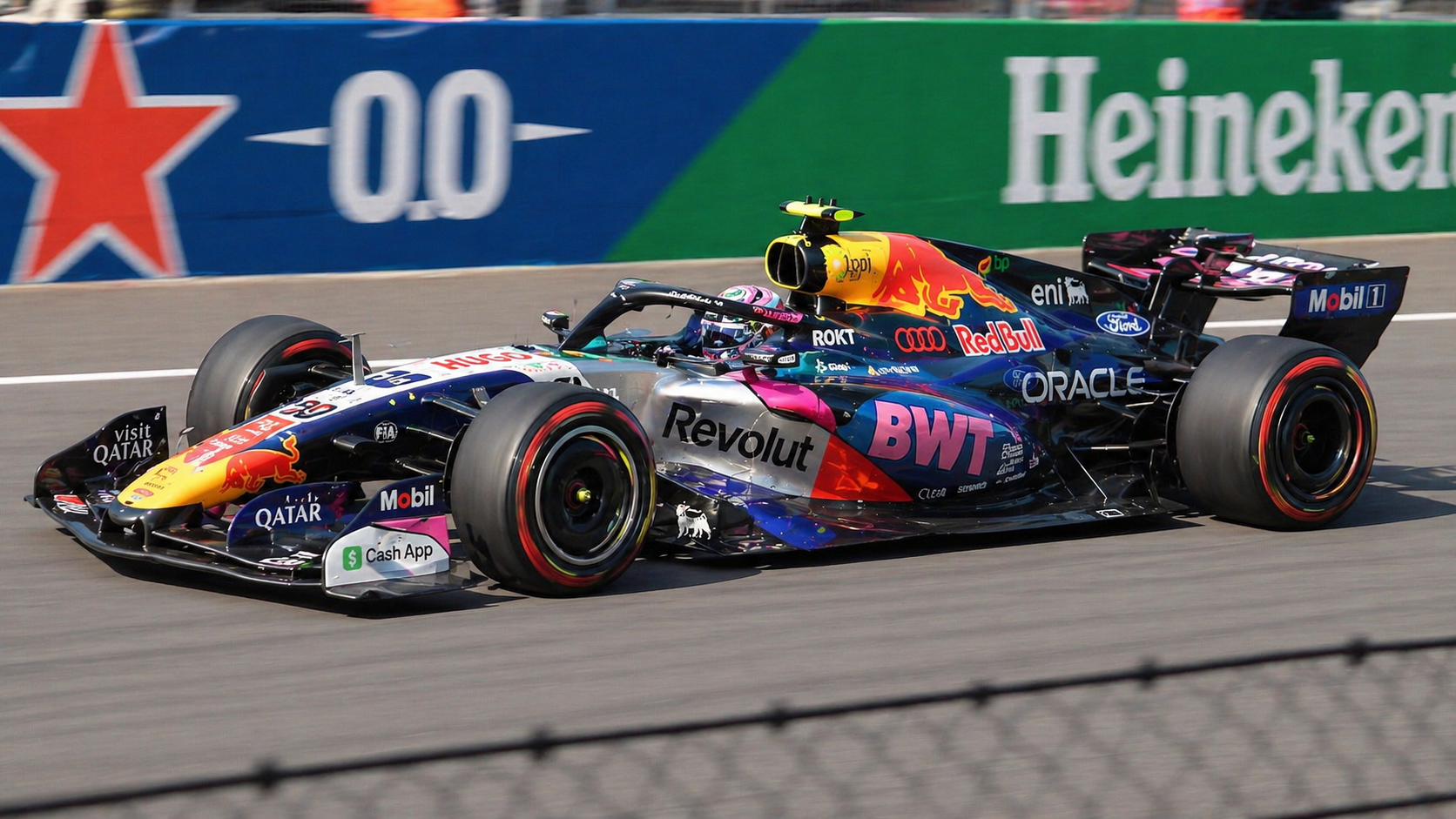
The new regulations era has already dismantled the established order in the 2026 season, proving that the move to a 50/50 power split is a far more volatile variable than any aero update of the last decade. The mid-field has become a technical minefield where energy harvesting efficiency is now the primary currency despite the headlines focusing on the front-running battle between Mercedes and Ferrari.
Maranello vs Brackley power struggle
The Silver Arrows have weaponised the early stages of the season, capitalising on a power unit that manages the 350kW MGU-K output with surgical precision. Kimi Anontelli’s rise to the top of the standings with 72 points is not merely a narrative beat; it is the result of a chassis that handles the high-torque delivery of the new electrical systems better than its rivals. The Brackley outfit has swept the opening three rounds in Melbourne, Shanghai and Suzuka, demonstrating a superior integration of the “Boost Mode” systems that dictate modern racecraft. However, Ferrari is mounting a serious technical challenge. The Scuderia has opted for a design philosophy that prioritises traction-limited low-speed exits, allowing Charles Leclerc and Lewis Hamilton to sit third and fourth in the standings with 49 and 41 points respectively. The data from the Chinese Grand Prix showed that while Mercedes holds the edge in sustained top-end deployment, Ferrari’s harvesting under braking–now capable of recovering up to 8.5 megajoules per lap– is currently the gold standard of the grid. This has kept Ferrari firmly in the hunt, particularly on circuits where the battery state-of-charge is more critical than pure aero efficiency.
Red Bull’s deployment deficit and the mid-field shift
The most clinical takeaway from the opening rounds is the vulnerability of the Red Bull-Ford project. Currently languishing in the lower half of the top ten, the RB22 is suffering from significant energy “clipping” on long straights. Max Verstappen’s struggle to ninth in the standings with only 12 points highlights a mechanical reality: the team is running out of deployment energy before the end of the straight, leaving them defenseless against the Manual Override system used by the chasing pack. Red Bull has admitted they are “paying the price” for major car decisions made during the transition phase as their power unit struggles to maintain the 337m/hr limit allowed for following cars. Mclaren has solidified their position as the third force due to this power vacuum. Reigning World Champion Lando Norris and his teammate Oscar Piastri have leveraged a balanced Mercedes-powered package to accumulate a combined 46 points, consistently outperforming the works Aston Martin-Honda project. Aston Martin, despite their exclusive partnership with Honda, has had a horrid start to the season, with Fernando Alonso and Lance Stroll yet to score a point. The AMR26 has shown glimpses of aerodynamic potential with its active wing systems, but the team is clearly still calibrating the complex relationship between their bespoke HRC power unit and the new "Straight Mode” aero configurations.
The rise of the new guard
The most surprising data point of 2026 is the performance of Haas and Alpine. Haas currently sits in a remarkable position with Oliver Bearman seventh in the standings on 17 points. By maximising the Ferrari customer engine’s superior energy recovery, Bearman has consistently punched above his weight in the technical sectors where harvesting is most critical. Despite his recent crash at Suzuka, the young driver has shown exemplary skills. Alpine, despite early shakedown hiccups and a late switch to Mercedes power, has found a rhythm with Pierre Gasly, who holds eighth place with 15 points. Gasly has made Q3 appearances in all the races so far, and even held back Verstappen at the Japanese Grand Prix from the second stint till the chequered flag. Audi’s entry into the sport has been a measured affair. While Gabriel Bortoleto secured the team’s first points with a ninth-place finish in Melbourne, the team is currently focused on “Phase 1” of their development: ensuring reliability between the Neuburg-built Power Unit and the Hinwil-built chassis. The R26 has shown a high rate of kinetic energy recovery, but Nico Hülkenberg’s experience has been vital in managing a car that still struggles with the drag penalties associated with the new active aero flaps
The mechanics of the “Manual Override” era
Strategic depth now hinges entirely on the new Manual Override system. The 2026 racing product is defined by energy management rather than raw aerodynamic grip. Telemetry indicates that the 350kW boost is being used as a tactical weapon; drivers are intentionally “de-rating” in one sector to ensure they have a full battery for a sustained attack. This is further complicated by the FIA’s new ADUO (Additional Development and Upgrade Opportunities) system, which grants struggling manufacturers like Honda and Ford more dyno time and upgrade windows to close the gap to Mercedes. The technical hierarchy is no longer a static map of downforce levels. Instead, we are seeing a fluid competitive order where the removal of the MGU-H has simplified engine architecture but increased the stakes of driver-led energy recovery. As the season progresses, the development race will shift from basic reliability to the refinement of software maps that dictate how that 470bhp electrical surge is deployed. The 2026 season is no longer about who has the fastest car, but who can keep their battery charged when the Manual Override button is pressed.