Analysis
THE YEAR FORMULA ONE OUTGREW ITS OWN HISTORY
by Kavi Khandelwal
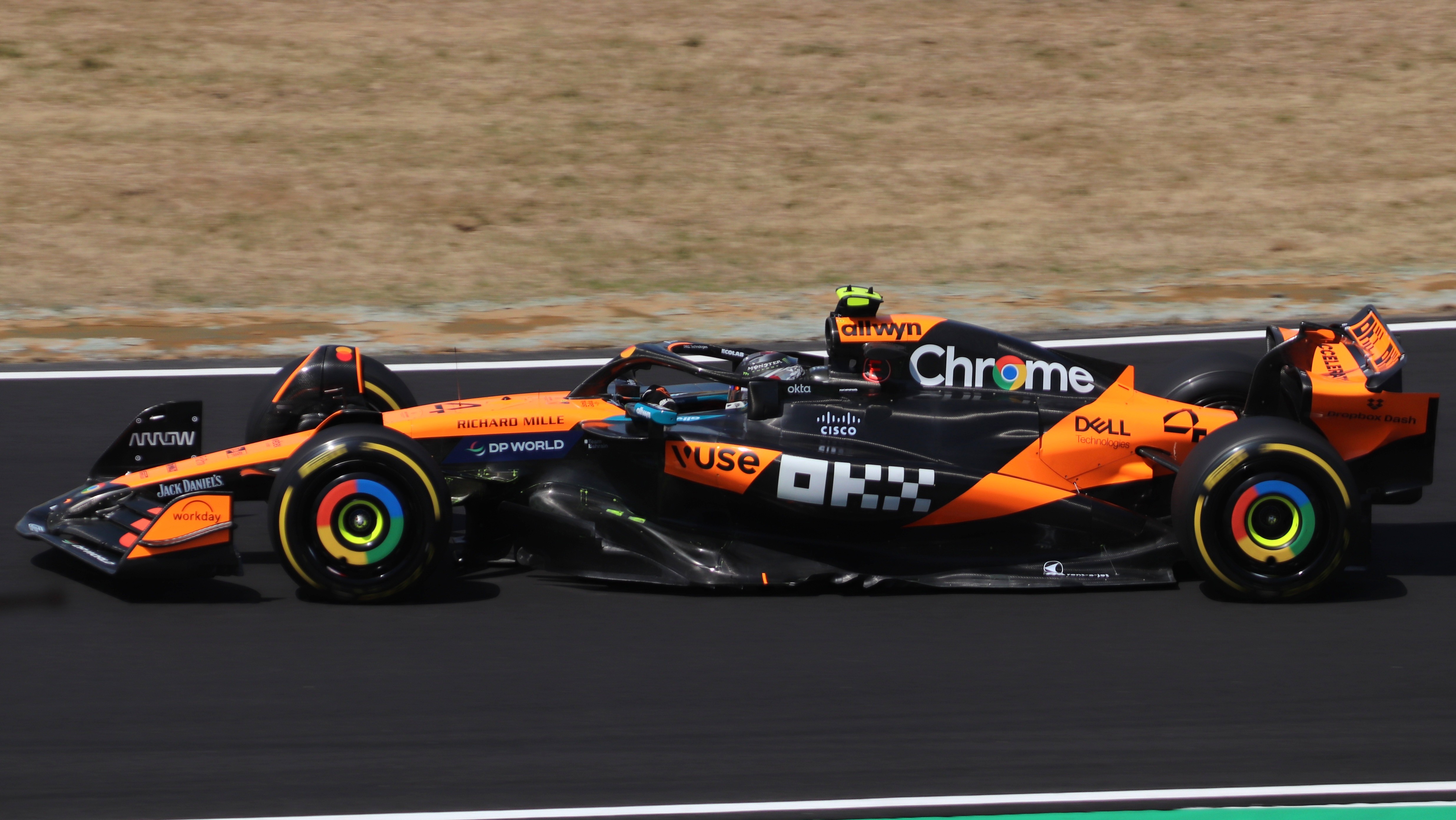
The 2025 Formula One marked the sport’s 75th anniversary. With the anniversary came a statistical anomaly that challenged decades of established history. The chapter of the ground-effects technical regulations was coming to an end, the season delivered a rare convergence of the three-way title tension, record-shattering rookie debuts, and some of the most unusual disciplinary penalties ever recorded. By the time the chequered flag fell in Abu Dhabi, the sport had crowned a new champion in Lando Norris, witnessed the end of a four-year Red Bull dynasty, and reached a global commercial zenith through record-breaking cinema and attendance.
The McLaren dominance and Norris’ maiden title The narrative that was the centre of attention in 2025 was the technical and operational resurrection of McLaren. Norris clinched his maiden World Drivers’ Championship with 423 points. He became the 35th champion in the sport’s history, and the first Briton to win for McLaren since 2008. Built on a foundation of relentless consistency, he stood on the podium 20 races across 24, a McLaren record for a single driver. McLaren secured its 10th Constructors’ Championship, moving ahead of Williams in the all-time standings to trail only Ferrari. Along the way, the pairing of Norris and Oscar Piastri shattered a record that many believed was untouchable: the 25 podiums achieved by Ayrton Senna and Alain Prost in the legendary 1988 season. The “Papaya” duo combined for 28 podium appearances in 2025. The team also matched its own 1998 record by achieving seven 1-2 finishes in a single season, including a dominant “perfect Sprint weekend” in Miami where they secured maximum points across every session.
https://www.instagram.com/p/DWgm5AGiCfl/?hl=en&img_index=1
Max Verstappen: Dominance without the crown Despite losing his title, Max Verstappen’s 2025 season remained statistically towering. He recorded eight Grand Prix victories, more than any other individual driver, matching a record previously held by Lewis Hamilton for the most wins in a season without winning the championship. Verstappen’s mastery of specific venues continued to grow; at Suzuka, he became the first driver in history to win four consecutive Japanese Grands Prix. He also pushed the physical limits of the SF-25 and MCL39 era at the “Temple of Speed.” During the Italian Grand Prix, he secured pole position with an average lap speed of 264.681 km/hr, the fastest qualifying lap in F1 history. This high-speed efficiency contributed to the 2025 Italian Grand Prix becoming the shortest full-length race in history, lasting only an hour, 13 minutes and 24 seconds. While he finished just two points behind Norris in the final standings, Verstappen concluded the ground-effect era as the only driver to have held the number one plate for the entirety of a set of aerodynamic regulations.
https://www.instagram.com/p/DRsVP_gjt2D/?hl=en&img_index=1
The rookie vanguard: Antonelli and Bearman The 2025 season saw a generational shift as rookies immediately began rewriting the record books. Mercedes protégé Kimi Antonelli was the standout, shattering two of Verstappen’s most famous age-related records during the Japanese Grand Prix weekend. At 18 years and 224 days, Antonelli became the youngest driver to ever lead an F1 race and the youngest to set a fastest lap in a Grand Prix. Furthermore, he matched a feat last achieved by Lewis Hamilton in 2007 by scoring points in each of his first three Grand Prix starts. However, the rookie class also contributed to the “bad” records of the year. Oliver Bearman, driving for Haas, became a frequent visitor to the stewards’ office. He ended the season with 10 penalty points on his Super License, the highest ever recorded for a debutant, coming within two points of an automatic race ban. His infractions ranged from overtaking under red flags in Monaco to causing collisions in Italy and Brazil. Ferrari’s year of statistical extremes For Scuderia Ferrari, 2025 was a year of polar opposites. The team ended Red Bull’s seven-year stranglehold on the DHL Fastest Pit Stop Award, demonstrating world-class consistency in the lane. While McLaren took the single fastest stop of the season at Monza with a time of 1.91 seconds, Ferrari’s crew was the most efficient over the 24-race calendar, frequently clocking stops at exactly 2.00 seconds. Conversely, the marquee arrival of Lewis Hamilton produced some of the most surprising “negative” records of his career. For the first time in 19 seasons, Hamilton failed to record a single Grand Prix podium, finishing the year with a best result of fourth on four occasions. His adaptation to the Ferrari SF-25 was further hampered by a career-high streak of three consecutive Q1 exits at the end of the season. The Chinese Grand prix served as a microcosm of Ferrari’s luck: Hamilton won the sprint from pole position as his first victory in red, only to be disqualified from the main race for excessive plank wear, part of a “triple threat” disqualification that also claimed Leclerc and Pierre Gasly.
https://www.instagram.com/p/DUp7nonjPPe/?hl=en
Overtaking and technical anomalies The 2025 calendar provided the wildest disparity in racing action ever recorded. The Dutch Grand Prix set an all-time F1 record for the most overtakes in a single race, with 188 successful passes facilitated by erratic weather and strategic gambles. However, in contrast, the Monaco Grand Prix remained the most stagnant, recording only four overtakes for the entire duration. Las Vegas continued its streak as the most action-packed dry race, providing 56 overtakes under the lights. Reliability also reached near-perfect levels for the front-runners. The MCL39 became a paragon of engineering, with its Mercedes power units suffering zero failures across 36 total sessions. This mechanical perfection allowed both drivers to compete for the win in every race. Disciplinary and unwanted records The season was particularly harsh for certain veterans. Lance Stroll set a new benchmark for qualifying struggles, recording 15 Q1 eliminations– the most of any driver in a single season– while his teammate Fernando Alonso failed to progress only twice. Disciplinary fines also reached record highs, totalling over €332,900 across the grid. The most bizarre penalties had involved Carlos Sainz who was fined €20,000 for missing the national anthem in Japan due to a sudden stomach ailment. This decision had sparked widespread debate regarding the FIA’s stringent new protocols. The cultural and commercial zenith The records were made off the track as well. 2025 was the year F1 truly transcended its status as a sport to become a global cultural pillar. The fanbase across the world reached 827 million, which is a 12% increase over 2024, officially making it more popular than the NBA. A younger and more diverse audience led to this growth, with 43% of fans now under the age of 35 and 42% of the total fanbase being female. Not only that, attendance records were shattered at nearly every venue. Silverstone drew 500,000 spectators over the weekend, while Melbourne followed closely with 465,000. Total season attendance hit a record of 6.7 million fans, with 19 of the 24 events selling out completely. This fervour was further stroked by the release of “F1: The Movie,” which earned over $630 million to become the highest-grossing sports film of all time. The final chapter of the ground-effect era was a testament to the sport’s evolving identity. Technical peaks at Monza and chaotic record-setting at Zandvoort, mixed with Norris’ long-awaited ascent to the rookie brilliance of Antonelli made every weekend seem to offer a new entry for the history books. As the paddock turns its attention to the massive regulatory shifts of 2026, the records of 2025 stand as the high-water mark of a golden era for F1.