Drivers
One grid, two realities: Drivers divided on 2026 regulations
By Kavi Khandelwal
A “nimble car” revolution was promised as the 2026 technical regulations came into place. A structural reset designed to strip away the “lumbering” nature of the previous era and replace it with a more agile, lightweight machinery. Yet, as the first three rounds of these new regulations have unfolded, the paddock has become a theatre of ideological conflict. A significant shift from pure mechanical grit to a high-stakes energy bookkeeping has left these best drivers of the world divided over whether they are truly racing the fastest cars on earth or simply competing in “Formula E on steroids.”
The 50/50 Power Paradox
The heart of the 2026 reset is the radical overhaul of the power unit and chassis. The sport has moved to a 50/50 power split between the 1.6 litre V6 internal combustion engine (ICE) and a massively beefed-up electrical system. The ICE’s output has dropped from 550kW to 400kW and the battery’s contribution has plummeted from a supplementary role to a primary one, skyrocketing from 120kW to 350kW, which is a nearly 300% increase. To compensate for the reduced peak power of the engine and keep lap times competitive, the FIA introduced Active Aerodynamics. This system allows front and rear wings to shift between two primary configurations: “Z-Mode” for high downforce in corners and “X-Mode” for low drag on straights. The cars are also 30kg lighter starting this season, and 100mm narrower, featuring a “Manual Override” boost that has replaced the previous era’s Drag Reduction System (DRS).
In favour of the Regulations
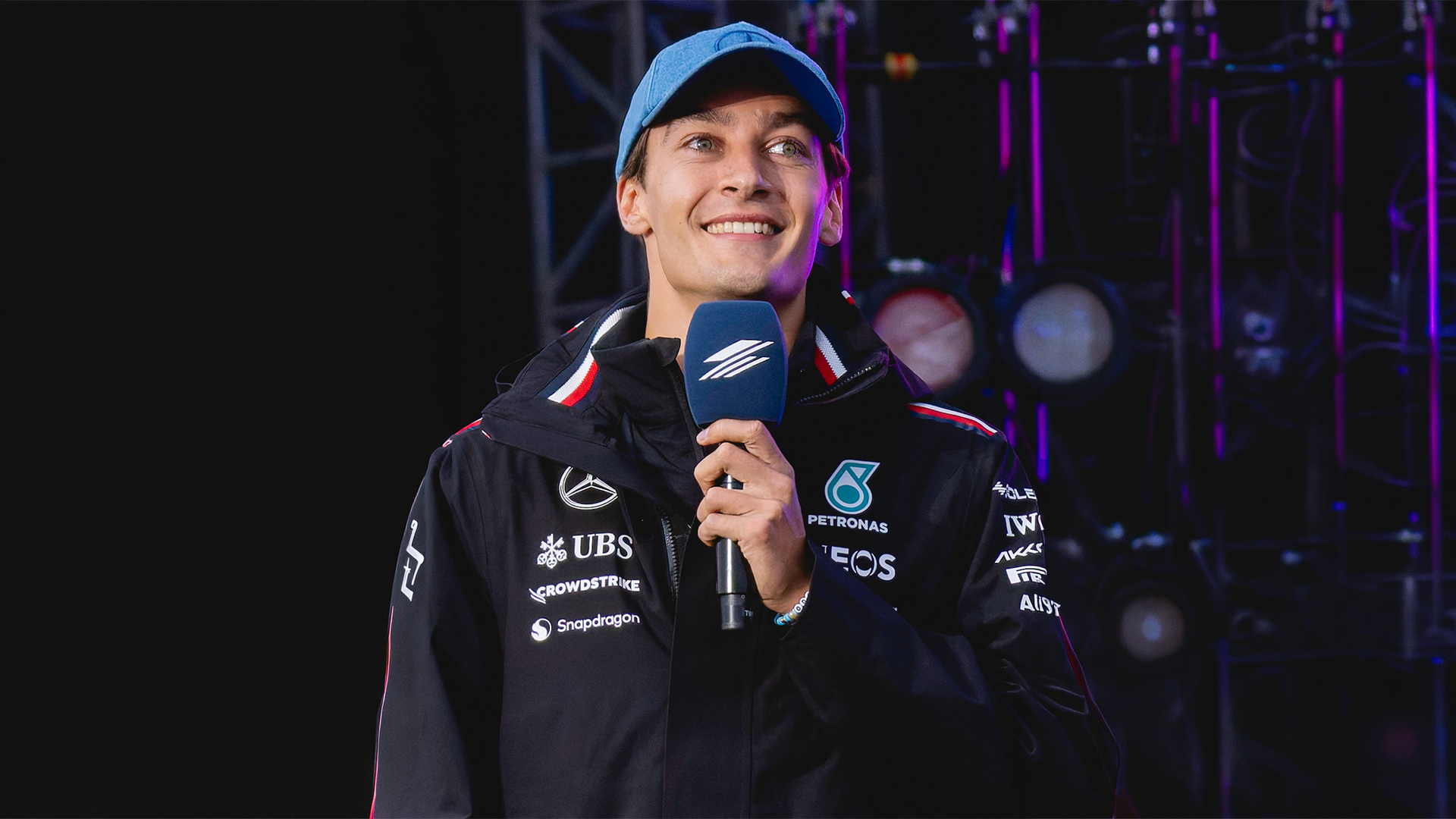
The start of this season has already proved that the drivers are divided in their opinions of the new technical regulations. For some, the complexity of the 2026 era is viewed as a welcome challenge, especially one that rewards intelligence and adaptability over raw aggression. Though, it might not be a coincidence that the ones in favour of these regulations are the ones who have been on the podium already. George Russell of Mercedes F1 Team has emerged to be one of the most vocal advocates of the new regulations. The team has mastered the electronic puzzle more than most, and Russell is currently enjoying that resurgence. “I don’t remember Formula 1 ever being like that, where you have three or four cars fighting for the same position,” He remarked as he compared the closer racing to his junior career. “There’s a lot going on, but it makes it quite fun and definitely feels more like a go-kart race in the past.” His teammate, the teenage sensation Kimi Antonelli, echoed this optimism after taking back-to-back poles in China and Japan. “The car feels more like a racing car. It’s a bit more agile,” Antonelli explained, adding that the reset has served as a great leveller for the grid. Even Lewis Hamilton, now in his second season with Scuderia Ferrari, has leaned into the challenge despite early frustration. “It’s the biggest regulation shift I think our sport has seen, at least in my time,” he noted. While he initially warned that the rules were “ridiculously complex” and that “fans are not going to understand it,” he has since embraced the need for a shift in driving style. “This is the period of time where you have to learn to be the most efficient driver that you’ve ever been,” he said, highlighting the need to use every tool in the “armoury” to harvest and deploy power effectively. He viewed the back-and-forth nature of the energy management as the pinnacle of racing. “That's how racing should be. It should be back and forth, back and forth. It shouldn't be like one move is done and that's it... out of all the cars that I've driven in 20 years, this is the only car that you can actually follow through high-speed [corners] and not completely lose everything.” he said. Oscar Piastri- McLaren’s Oscar Piastri has taken a characteristically analytical view. While acknowledging the difficulties, he sees the energy management as a new layer of racecraft. “It’s going to be a lot more management from the drivers ourselves. Being a good racing driver has always been about managing lots of different things... adding in managing the battery... that's largely going to be up to us as drivers.” Piastri said, noting that the “interesting scenarios” that are created by the 350kW deployment will ultimately reward the drivers who play the sport like chess: think three laps ahead.
Against the Regulations
The sport’s most established stars have formed a formidable alliance as the opposition. While these drivers have raised many safety concerns, emphasised especially after Haas’ Oliver Bearman’s 50G crash at the 2026 Japanese Grand Prix, their teams have not seemed to learn the navigation of the new regulations. Max Verstappen has been the most scathing critic, his disdain only growing after a string of reliability issues and a lack of competitive pace. “It’s terrible, if someone likes this, then you really don't know what racing is about. It's not fun at all. It's playing Mario Kart. This is not racing. You are boosting past, then you run out of battery the next straight... for me, it's just a joke.” Max Verstappen- Verstappen famously vented, mocking the “mushroom boost” effect of the Manual Override. For the four-time world champion, the necessity of “lifting and coasting” on a straight just to ensure the battery doesn’t “de-rate” is a betrayal of the sport’s identity. Despite being on the podium for two of the past three races, Charles Leclerc reached his breaking point during qualifying at Suzuka, where the intricacies of the energy deployment cost him a front-row start. “I honestly cannot stand these new rules for qualifying… it’s a f**king joke!” Leclerc erupted over the radio. Later, he explained that the system punishes the very “limit-pushing” style he is famous for: “I go faster in corners, throttle earlier, for f**k’s sake, I’m losing everything in the straight!” He noted that taking a “massive risk” in Q3 now often results in “confusing the engine side of things,” where the software overrides the driver’s intent. The Williams drivers have dominated the conversation as well with safety concerns. Carlos Sainz has repeatedly warned that the Active Aero is a “plaster on top of a plaster” designed to hide a flawed engine formula. Following Bearman’s crash which was attributed to a sudden loss of downforce when the wings didn’t “re-optimise”, Sainz was blunt. “Raing with your wings open at 340KPH… sooner rather than later, there’s going to be a big crash. I don't like having to race flat out at 340 kph with no downforce.” he warned, specifically citing high-speed “kinks” in tracks like Jeddah and Australia where “Straight Mode” becomes “sketchy.” Alex Albon has echoed these sentiments, fearing the regulations will also widen the gap between the top teams and the rest of the field. “I don’t think from top to bottom it will be three seconds,” he noted. His words rang true as fans across the world mourn the loss of the tightly-packed grids of 2024 and 2025. “A driver who's quite smart and can understand the system and abuse the system... they're going to find performance in that.” he said. Lando Norris- The reigning world champion Lando Norris also joined the chorus of disapproval, reflecting on the transition from the previous generation of cars. “We’ve come from the best cars ever made in Formula 1… to probably the worst.” He described the current racing as “very artificial” and dangerous, even suggesting that the speed deltas created by different battery states make Lap 1 a “sketchy” lottery. After witnessing the chaotic speed differentials in Melbourne and Suzuka, he issued a chilling warning about the inevitable consequences of these regulations, “It is chaos, and we are going to have a big accident. Depending on what drivers do, you can have closing speeds of 30, 40, 50kph, and when someone hits another driver at that speed you are going to fly and go over the fence and do a lot of damage to yourself and maybe to others, and that is a pretty horrible thing to think about.”
The Verdict
The 2026 regulations haven’t just changed the cars; they’ve sanitised the competition into a series of “fake” racing moments driven by software rather than skill. F1 is an engineering sport first, but not to the extent that the car overrides the driver’s decision. When the world’s best drivers are forced to lift-and-coast on straights or risk “confusing” the engine mappings, the sport is no longer about pushing the boundaries of physics. The sport is now about managing a battery spreadsheet at 340ph. The safety concerns voiced by Norris and Sainz are the most damning evidence. We are watching elite athletes hurtle down straights with zero downforce, relying on active wings to snap back into place before the next corner. It is an unnecessary, high-speed gamble for the sake of an artificial spectacle. F1 should be the ultimate test of human grit and mechanical purity, but this era feels increasingly like a hollow simulation. If the FIA continue to prioritise “mushroom boosts” over driver safety and authentic racing, the next big headline might not be about a thrilling overtake; it might be about a “catastrophic accident” that the grid has been warning us about since pre-season.