News
Nigel Mansell disagrees with Stefano Domenicali’s comparison of F1 eras
By Kavi Khandelwal
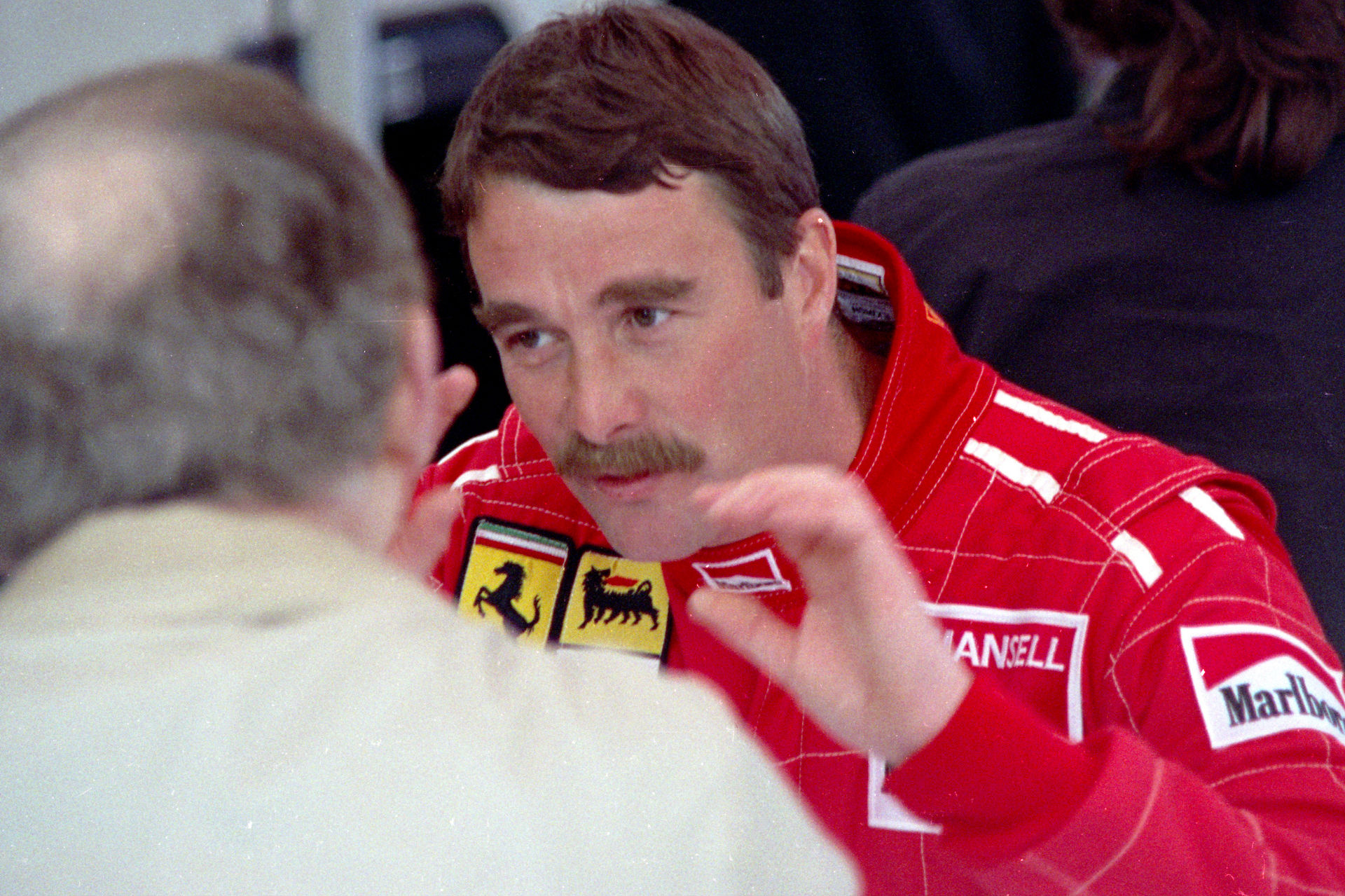
Nigel Mansell blasts F1's 2026 regulations, calling overtakes "totally false" as computers — not drivers — decide who passes who.
<span id="docs-internal-guid-d11843af-7fff-7882-8da3-53b19fb99ce6"><span style="font-size: 12pt; font-family: "Times New Roman", serif; color: rgb(0, 0, 0); background-color: transparent; font-variant: normal; vertical-align: baseline;">Nigel Mansell has never been one to hold back. The man they called Il Leone — the lion — built a career on throwing himself at racing with more heart than caution, and that same unfiltered passion was on full display this week when the 1992 world champion sat down with </span><span style="text-decoration: underline; font-size: 12pt; font-family: "Times New Roman", serif; color: rgb(17, 85, 204); background-color: transparent; font-style: italic; font-variant: normal; text-decoration-skip-ink: none; vertical-align: baseline;"><a href="https://x.com/autosport/status/2049060266369802334?s=20" target="_blank" rel="noopener noreferrer">Autosport</a></span><span style="font-size: 12pt; font-family: "Times New Roman", serif; color: rgb(0, 0, 0); background-color: transparent; font-variant: normal; vertical-align: baseline;"> to give his verdict on Formula One's most controversial regulations in years.</span></span>
<span id="docs-internal-guid-d8a86143-7fff-0b33-e3a1-680c81d5db3d"><p dir="ltr" style="line-height:1.38;margin-top:12pt;margin-bottom:12pt;"><span style="background-color: transparent; color: rgb(0, 0, 0); font-family: "Times New Roman", serif; font-size: 12pt;">It wasn't pretty.</span></p><p dir="ltr" style="line-height:1.38;margin-top:12pt;margin-bottom:12pt;"><span style="font-size: 12pt; font-family: "Times New Roman", serif; color: rgb(0, 0, 0); background-color: transparent; font-variant: normal; vertical-align: baseline;">F1 2026 has been one of the most controversial seasons in recent memory. The brand-new 50-50 split between the internal combustion engine and battery power has come under fire from fans and drivers alike, with those behind the wheel now required to harvest energy every lap. </span></p><p dir="ltr" style="line-height:1.38;margin-top:12pt;margin-bottom:12pt;"><span style="font-size: 12pt; font-family: "Times New Roman", serif; color: rgb(0, 0, 0); background-color: transparent; font-variant: normal; vertical-align: baseline;">Overtake numbers are up — but so is the frustration. Much of the increase comes down to the energy one driver expends to make a pass, only to then be immediately re-overtaken by the same car. The yo-yo effect. Racing reduced to a video game mechanic.</span></p><p dir="ltr" style="line-height:1.38;margin-top:12pt;margin-bottom:12pt;"><span style="font-size: 12pt; font-family: "Times New Roman", serif; color: rgb(0, 0, 0); background-color: transparent; font-variant: normal; vertical-align: baseline;">Mansell called it exactly what many believe it to be.</span></p><p dir="ltr" style="line-height:1.38;margin-top:12pt;margin-bottom:12pt;"><span style="font-size: 12pt; font-family: "Times New Roman", serif; color: rgb(0, 0, 0); background-color: transparent; font-variant: normal; vertical-align: baseline;">"I might get shot for saying this, but sadly some of the overtakes are just totally false," he said. "Some of the overtakes look great and then you come out the next corner and the car just blasts past you and the other car goes backwards because the computer is giving you the extra power not at the right time — and the driver doesn't control that."</span></p><p dir="ltr" style="line-height:1.38;margin-top:12pt;margin-bottom:12pt;"><span style="font-size: 12pt; font-family: "Times New Roman", serif; color: rgb(0, 0, 0); background-color: transparent; font-variant: normal; vertical-align: baseline;">A driver who doesn't control the pass. In Mansell's era, a move on someone was a statement — a product of nerve and timing and the willingness to throw the car somewhere the other guy didn't expect. What he's describing now isn't racing. It's an algorithm in a firesuit.</span></p><p dir="ltr" style="line-height:1.38;margin-top:12pt;margin-bottom:12pt;"><span style="font-size: 12pt; font-family: "Times New Roman", serif; color: rgb(0, 0, 0); background-color: transparent; font-variant: normal; vertical-align: baseline;">Mansell pointed specifically to a moment involving reigning world champion Lando Norris at the Japanese Grand Prix, where Norris found himself passing Lewis Hamilton not because he chose to, but because the energy system gave him no alternative. </span></p><p dir="ltr" style="line-height:1.38;margin-top:12pt;margin-bottom:12pt;"><span style="font-size: 12pt; font-family: "Times New Roman", serif; color: rgb(0, 0, 0); background-color: transparent; font-variant: normal; vertical-align: baseline;">"I think it was Lando who quoted, 'Well, I didn't want to overtake him going into the first corner and into the chicane, but I had no choice,'" Mansell said. "And then coming out of the corner, he's in the lead and then the car just blasts past him again going down the straight."</span></p><p dir="ltr" style="line-height:1.38;margin-top:12pt;margin-bottom:12pt;"><span style="font-size: 12pt; font-family: "Times New Roman", serif; color: rgb(0, 0, 0); background-color: transparent; font-variant: normal; vertical-align: baseline;">A driver forced into a pass he didn't want to make. A pass that was immediately reversed. That's not a racing incident — it's a malfunction of the entire sporting premise.</span></p><p dir="ltr" style="line-height:1.38;margin-top:12pt;margin-bottom:12pt;"><span style="font-size: 12pt; font-family: "Times New Roman", serif; color: rgb(0, 0, 0); background-color: transparent; font-variant: normal; vertical-align: baseline;">Mansell also pushed back sharply against F1 CEO Stefano Do</span><span style="background-color: transparent; font-size: 12pt; font-family: "Times New Roman", serif; color: rgb(0, 0, 0); font-variant: normal; vertical-align: baseline;">menicali's </span><span style="background-color: transparent; text-decoration: underline; font-size: 12pt; font-family: "Times New Roman", serif; color: rgb(17, 85, 204); font-variant: normal; text-decoration-skip-ink: none; vertical-align: baseline;"><a href="https://x.com/autosport/status/2049060266369802334?s=20" target="_blank" rel="noopener noreferrer">claim</a></span><span style="background-color: transparent; font-size: 12pt; font-family: "Times New Roman", serif; color: rgb(0, 0, 0); font-variant: normal; vertical-align: baseline;"><a href="https://x.com/autosport/status/2049083102203416761?s=20" target="_blank" rel="noopener noreferrer"> </a>that drivers in the 1980s were already using lift-and-coast techniques, suggesting the modern approach was nothing new. Mansell's response was as direct as it gets. </span></p><p dir="ltr" style="line-height:1.38;margin-top:12pt;margin-bottom:12pt;"><span style="font-size: 12pt; font-family: "Times New Roman", serif; color: rgb(0, 0, 0); background-color: transparent; font-variant: normal; vertical-align: baseline;">"No, we didn't. No, no, we didn't," he said — before explaining that any throttle management in his day was intuitive and situational, not the sustained, algorithmically enforced h</span><span style="background-color: transparent; color: rgb(0, 0, 0); font-family: "Times New Roman", serif; font-size: 12pt;">arvesting that defines the 2026 package. There's a difference between a driver reading a slipstream and a computer dictating acceleration. Mansell knows which one he signed up for.</span></p><p dir="ltr" style="line-height:1.38;margin-top:12pt;margin-bottom:12pt;"><span style="font-size: 12pt; font-family: "Times New Roman", serif; color: rgb(0, 0, 0); background-color: transparent; font-variant: normal; vertical-align: baseline;">He joins a growing list of voices — most prominently Max Verstappen — who have publicly condemned the new ruleset. But there's something specific about Mansell's intervention. He's not a current driver navigating team politics or sponsor sensitivities. He can say what the paddock whispers. And he chose to.</span></p><p dir="ltr" style="line-height:1.38;margin-top:12pt;margin-bottom:12pt;"><span style="font-size: 12pt; font-family: "Times New Roman", serif; color: rgb(0, 0, 0); background-color: transparent; font-variant: normal; vertical-align: baseline;">"The fans around the world — I know an awful lot of them are very grumpy. And to be fair to the fans, I agree with them," he said.</span></p><p dir="ltr" style="line-height:1.38;margin-top:12pt;margin-bottom:12pt;"><span style="font-size: 12pt; font-family: "Times New Roman", serif; color: rgb(0, 0, 0); background-color: transparent; font-variant: normal; vertical-align: baseline;">The FIA has introduced changes from this weekend's Miami Grand Prix, with tweaks to the regulations aimed at addressing the worst of the criticism. Whether that's enough remains to be seen. But Mansell's words will linger well beyond Miami. When a man who once pushed his own car across the finish line in the Arizona desert tells you the racing isn't real anymore, that's worth listening to.</span></p></span>