News
Five Tracks That Deserve a Place on the F1 Calendar
By Kavi Khandelwal
The 2026 season is already operating at a deficit. With the Bahrain and Saudi Arabian Grands Prix cancelled following the outbreak of the Iran war, the calendar sits at 22 rounds — and the conversation about what replaces them, and what the calendar should look like going forward, has never been louder. F1 has never been busier, with new races arriving and fresh markets being explored, filling up the calendar years in advance. And yet something is slipping through the cracks. The sport keeps expanding forward while quietly dismantling its own foundations — circuits that produced the racing everyone claims to want, gone in favour of street tracks built for spectacle over substance. That conversation has intensified with the confirmation that Portimão will return for 2027 and 2028, proving that the door isn't permanently closed. It's just a question of who has the will to push it open. Here are five circuits that belong on the grid.
Kyalami — The Race F1 Owes Africa
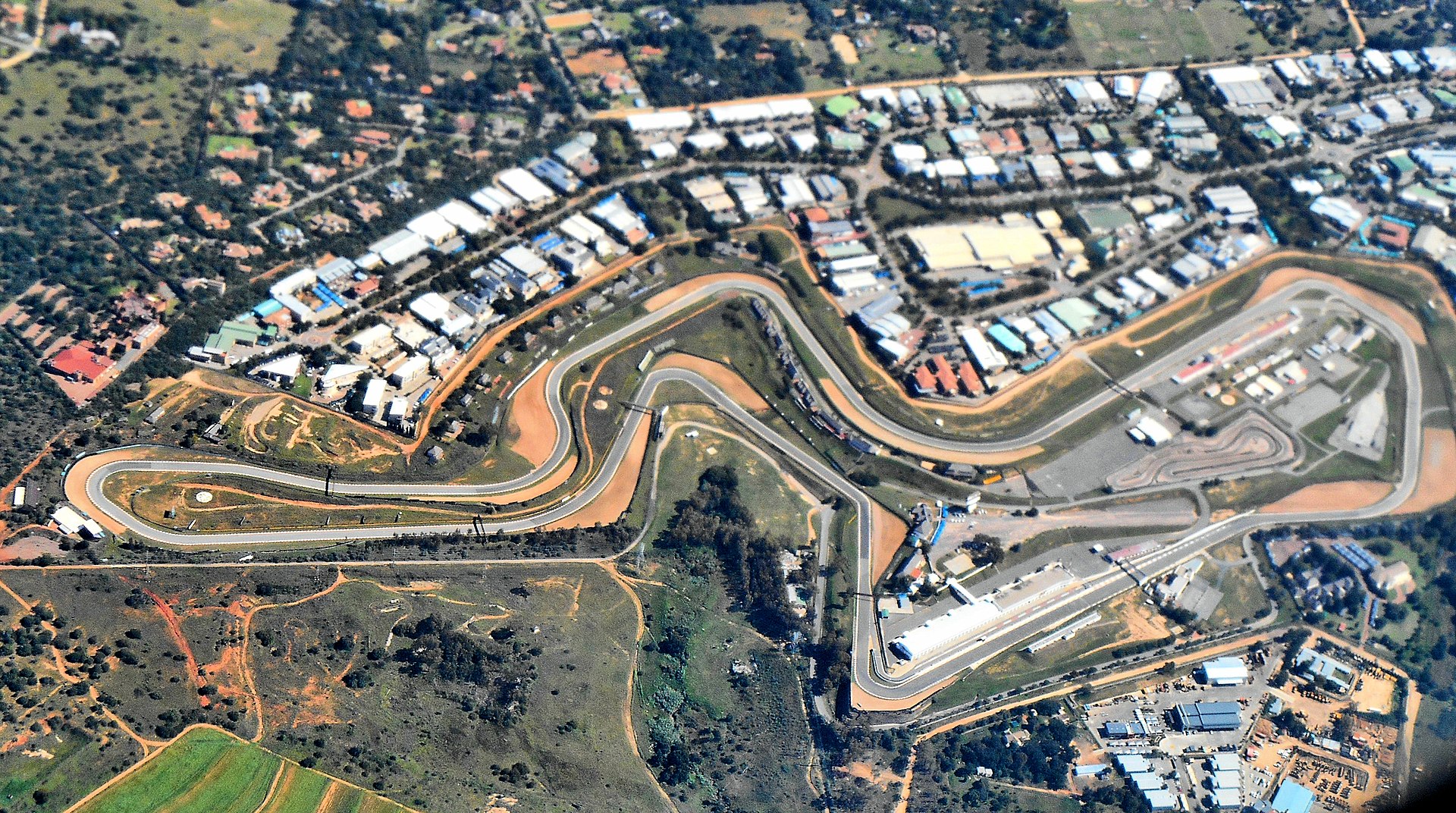
F1 last raced on the African continent in 1993, with Kyalami hosting the South African Grand Prix — a race Alain Prost won from his Williams. Thirtytwo years and counting. No other continent has been excluded for that long from a sport that calls itself a World Championship. Kyalami emerged as the most popular option in a recent RacingNews365 fan poll on which circuit fans most want to see return. The groundswell is not nostalgic sentiment. It is a straightforward question about geography and what a global sporting series owes the regions it has abandoned. The track itself holds up. Kyalami is a flowing layout with a mix of undulations and heavy braking zones, designed to encourage overtaking over a race distance, and has achieved FIA Grade 1 status, making it eligible to host a Grand Prix. That is not a minor footnote. Circuits spend years chasing that certification. Kyalami already has it. Lewis Hamilton has repeatedly backed a race in Africa, calling it a "huge dream," and F1 CEO Stefano Domenicali has acknowledged the desire, stating "we want to go to Africa, but we need to have the right investment and the right strategic plan." The infrastructure argument is real. So is the financial one. But when the sport has found money for Las Vegas and Miami, the idea that Johannesburg cannot be made to work is a choice, not a constraint. The absence of Africa is not a logistical oversight. It is a structural gap that undermines the sport's own identity.
Istanbul Park — The Track That Keeps Getting Left Behind
There are circuits that produce good racing. There are circuits that produce memorable racing. Istanbul Park does something rarer: it produces both at the same time, on demand. Istanbul Park was on the calendar from 2005 to 2011 before a brief return in 2020 and 2021, during which Lewis Hamilton clinched his record-equalling seventh world title. The races in that pandemic window were not just celebrated for what they meant off the track. They were genuinely excellent. Multiline, multilap battles through Turn 8 — a fourapex corner that demands full commitment from entry to exit — and variable conditions that exposed every car and driver on the grid. Domenicali has spoken positively about a Turkish return, and organisers in Istanbul have confirmed that negotiations with Formula 1 are ongoing. The main concern is that Istanbul's paddock and hospitality infrastructure had fallen somewhat out of date prior to a 2024 operator takeover, and the circuit's FIA Grade 1 licence officially expired in November 2023 — meaning an expedited renewal would be required before any race weekend could be confirmed. Those are fixable problems. A depleted calendar with two empty April slots is as clear an invitation as Istanbul is ever likely to receive. The circuit earns its place on pure racing merit. The question is whether the commercial framework can be assembled quickly enough to match.
Imola — Italy's Second Race is Not a Luxury
The Emilia Romagna Grand Prix at Imola was not extended beyond 2025, meaning F1 will race in Italy only once in 2026, at Monza. That is a reduction that rewards no one. Italy houses two of the sport's most storied constructors in Ferrari and, now, an entry-level Audi programme routed through the country's racing culture. Reducing its representation on the calendar is an odd way to honour that history. Imola received notable backing in fan polling, and the arguments for its return go beyond nostalgia. The circuit's character is fundamentally different from Monza. Where Monza is a flatout power track with minimal sustained technical demand, Imola is narrow, unforgiving, and rhythmic. It punishes mistakes. It rewards drivers who are brave and precise in equal measure — qualities that the most processional circuits on the current calendar conspicuously fail to test. Imola's deal ended in 2025, creating room for manoeuvre on the 2027 schedule, and the circuit has a record of stepping up when F1 needs it. The Emilia Romagna region has consistently demonstrated political will and financial backing. Dropping Imola was not a decision made because the circuit failed. It was made because calendar slots have a finite supply. Given that supply has just opened up, the decision deserves revisiting.
Hockenheim — Germany Cannot Stay Dark
The Hockenheimring has delivered some of F1's most exhilarating wetweather races — including the 2019 German Grand Prix, where Max Verstappen sealed victory while Hamilton ended up in the gravel. It is a circuit that amplifies pressure. Its long first sector, tight infield, and short sharp stadium section produce a track that challenges car setup philosophy from the very first lap. Germany's absence from the calendar is increasingly conspicuous. With Mercedes and Audi both active in the sport, and both representing German engineering at the pinnacle of motorsport, the country that shaped the modern power unit era does not have a home race. That is an anomaly, not an inevitability. Hockenheim is actively in negotiations with Formula 1, with Domenicali namechecking the circuit — alongside Portimão, Istanbul, and Barcelona — as among those in active talks. The circuit has new ownership that has shown clear signs of interest in returning to the grid. The financial structure is the final variable. With Audi now a constructor and FordRed Bull building momentum, a German Grand Prix sells itself — to sponsors, to fans, and to the manufacturers who would benefit most from a race on home soil.
Sepang — The Tilke Track That Actually Works
Hermann Tilke built many of the circuits fans love to criticise. Sepang is the exception they tend to forget. The Malaysian circuit is well regarded for its wide layout and overtaking opportunities after hosting Formula 1 from 1999 to 2017. The track's design — with its broad, sweeping first sector and heavybraking final hairpin — produces natural overtaking on multiple lines. Its geography means wet weather can arrive without warning, producing exactly the kind of unpredictable conditions that contemporary circuit design tends to engineer out entirely. The circuit is widely considered a masterpiece, with its "snail shell" Turn 1, highspeed corners, and long straights, while Kuala Lumpur's status as a global transit hub means air freight logistics are straightforward. The realistic barrier is money. Circuit representatives have said returning is not impossible provided they could find the right corporate partner to help fund it, but acknowledged there is stiff competition in the hosting market. That competition, however, cuts both ways. A resurgent Southeast Asian fan base, proximity to the existing Singapore and Japan rounds for freight efficiency, and a circuit that produces genuine racing — Sepang is not asking F1 for a favour. It is offering something the calendar currently lacks: a track where the racing does the talking.
The Bigger Problem
The common thread running through all five is not merely that they are good circuits. It is that they represent things the current calendar undervalues — geography, racing quality, driver challenge, and the sport's own history. The Concorde Agreement caps the calendar at 25 races per season, which means every addition requires a removal. That forces a real conversation about what the calendar is for. If it exists to generate commercial revenue in new markets, the current model makes sense. If it exists to produce the best possible racing world championship, several of the choices made in the past decade need revisiting. The return of Portimão shows the argument can be won. The cancellation of Bahrain and Saudi Arabia — however unwelcome the circumstances — has created a window that may not stay open long. What fills it will say a great deal about what F1 actually values, as opposed to what it claims to.