News
Dissecting Alpine F1 Team’s “An Open Letter”
By Kavi Khandelwal
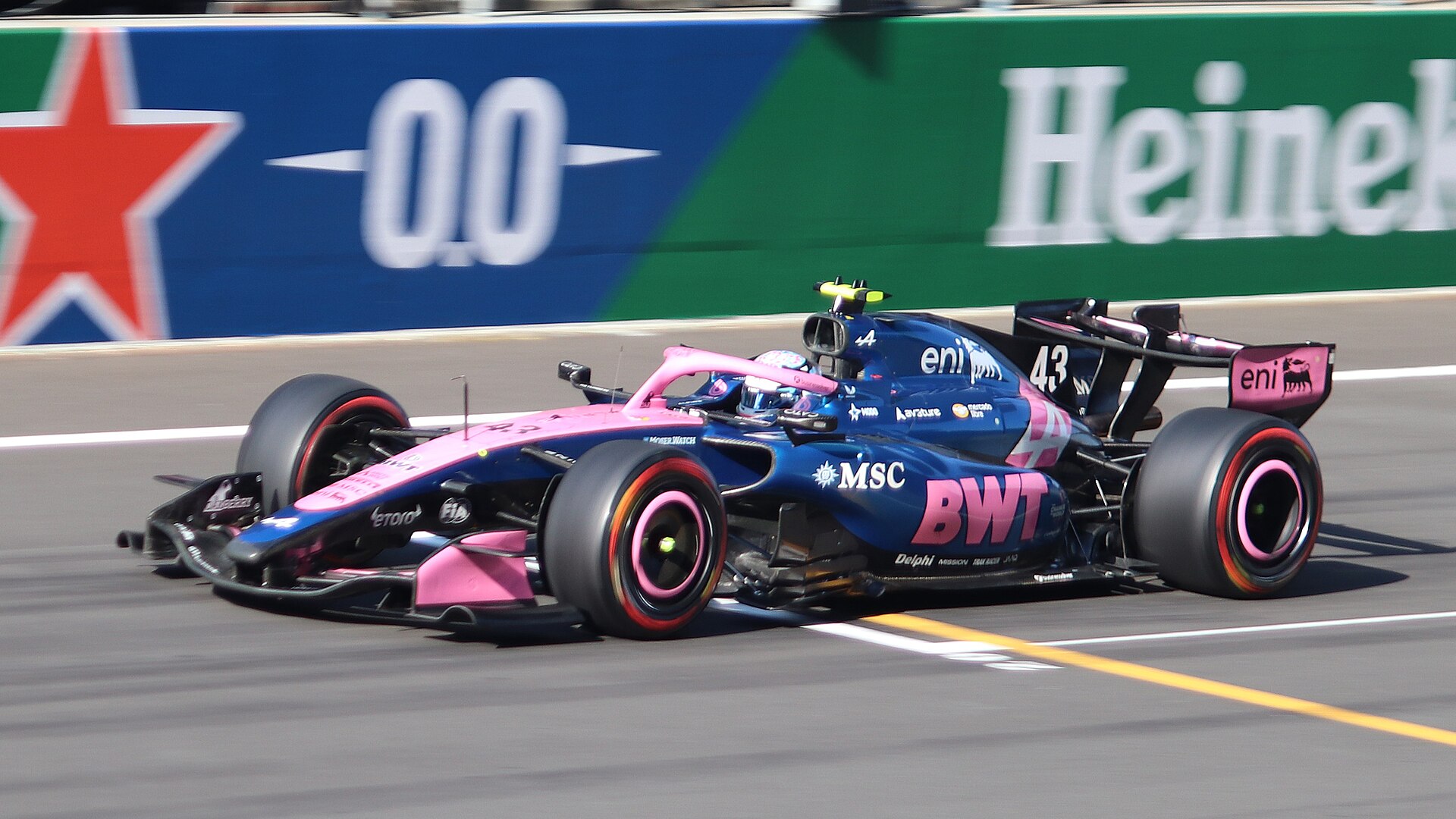
The Alpine Formula One Team has reached a breaking point. As we dissect the open letter by the team that seeks to bridge the chasm between digital toxicity and the mechanical reality of the paddock, we find things that perhaps as fans, we were aware of the wrongdoings already.
Following the fallout of the 2026 Japanese Grand Prix, the Enstone-based squad has been forced to shift its focus from aero-efficiency to community defense. This is a visceral response to a culture that has forgotten that these drivers are real people and that an F1 team is built by humans who, despite their brilliance, can and will make mistakes.
The team is drawing a firm line in the sand, explicitly "speaking out against the hate and abuse being aimed at not just one of our own drivers, but also aimed towards our racing counterparts and other members of the Formula One family." This is not just a plea for kindness; it is a demand for a return to decency in a sport where the "closing speeds" of the cars are matched only by the speed of online vitriol.
The team noted that while "people will always have differences of opinion and disagree," the resulting abuse following recent incidents was "not in the spirit of the sport."
As a fan, I have always been of the belief that we need to bring back a sense of shame to the internet. Drivers of every kind have faced online abuse for years. However, now that abuse extends to the team personnels and the drivers’ friends and families. The digitisation of the sport, while aimed for growth, has certainly led to more harm.
When a driver like Franco Colapinto is targeted after a collision, the community ignores the fact that "the most important thing is the safety and wellbeing of the drivers." To attack a driver who has "given so much to the team in the past" or a newcomer finding his feet is a failure of the fanbase.
Alpine was clear: "Social media should be a place to bring people together, share in experiences and encourage healthy debate." They have "previously taken a strong stance condemning any hateful behaviour" and remain in "regular dialogue with Formula One and the FIA" to mitigate this in the future.
Previously, the team also came for the defense of former-Alpine driver, Jack Doohan at the beginning of the 2025 season.
Specifically, the team highlighted two flashpoints that triggered this latest wave of toxicity.
"The team condemns the hateful messages aimed towards Franco after last weekend’s race in Japan, the same way it condemns the abuse and threats that were aimed towards Esteban Ocon following a collision between the two cars at the Chinese Grand Prix." During that Shanghai incident, Ocon took "full responsibility and apologised to Franco," yet the abuse that followed was described as an "oversight not to call it out sooner."
Furthermore, the team condemned the behaviour following the incident between Colapinto and Oliver Bearman at Suzuka. Despite the FIA reviewing the event and deeming that "no further action was necessary," the digital response was disproportionately aggressive.
Alpine reminded fans that "the closing speeds are a characteristic of these cars," and such incidents are often mechanical or strategic byproducts rather than malicious intent.
The narrative of "sabotage" is perhaps the most egregious insult to the collective effort at Enstone. To suggest a team would intentionally hinder its own car is to fundamentally misunderstand the business of racing.
Alpine addressed this head-on, stating that "any questions about sabotage or not giving Franco the same car are completely unfounded." In a world where every millisecond is worth millions in prize money, "it’s absolutely not in the team’s interests to not score points and any suggestion of self sabotage isn’t conducive to that ultimate end goal".
The letter clarifies the mechanical reality of the season, explaining that "in some instances, given the need to fast-track parts and carefully manage the manufacturing process, the team is only able to bring select parts or upgrades to some events." However, they were adamant that "both Pierre [Gasly] and Franco [Colapinto] have been running with the same equipment," with only minor "low-performance impacting parts" differing in China due to gearbox components.
To claim otherwise is to spit in the face of the mechanics who "are working incredibly hard and are fuelled by you, the fans, to keep pushing in the hope of more good results."
When we look at the performance delta, the telemetry tells a story of experience rather than exclusion.
Pierre Gasly currently holds a 3-0 qualifying lead over Colapinto, showing remarkable consistency by scoring points in every round so far—Australia, China, and Japan. This isn't a conspiracy; it is the reality of racing against a "class act" who can "perform at an incredibly high level on a consistent basis." Gasly’s P7 in Japan and P6 in China are the benchmarks the team needs to stay as the "fourth fastest car".
Far from "withholding of information," the team insists that "Pierre and Franco regularly come to each other’s desks in the engineering office to share data and feedback." There is "no keeping performance tricks hidden away," as modern F1 requires every byte of data to be shared to succeed.
The team has placed its "trust" in Franco, ensuring he has "equal footing alongside Pierre". They are clear that "there might be times this year when pushing in the development race that upgrades come to one car first," but they have committed to being "completely transparent" about such moves.
The technical reality of F1 often escapes the casual observer. The A526 is a "completely new car from front to back," featuring Mercedes power units and complex active aerodynamics.
"The engineering group is very much united and all pulling in the same direction," a statement meant to silence those who believe the team is divided. Alpine noted that "this is especially the case with these new cars, Power Units, and strategic way of going racing on track."
The suggestion of internal friction is "a thing of the past and not part of modern Formula One." Success requires total collaboration, and the "hundreds of people back at Enstone" are focused on maintaining their position in the top five of the Constructors' Championship, where they currently battle with the likes of Red Bull and Haas.
As the grid prepares for Miami, the message is one of unity. The team back at the factory is "not counting on its laurels and is staying grounded." It is time for the fans to do the same. These are not characters in a video game; they are professionals in a "highly competitive and complex sport." We must respect the hard work, the mistakes, and the human lives behind the visor.
The team's closing sentiment was one of resilience: "On track, our rivals won’t be resting and standing still, so neither will we."
By defending their drivers and their technical staff, Alpine is attempting to restore a baseline of respect that the sport desperately needs. It is a reminder that while the cars are made of carbon fibre and titanium, the hearts driving them are very much human.