Analysis
Wired that way: How Jos Verstappen built a son who doesn't flinch
By Jawaad Zafar
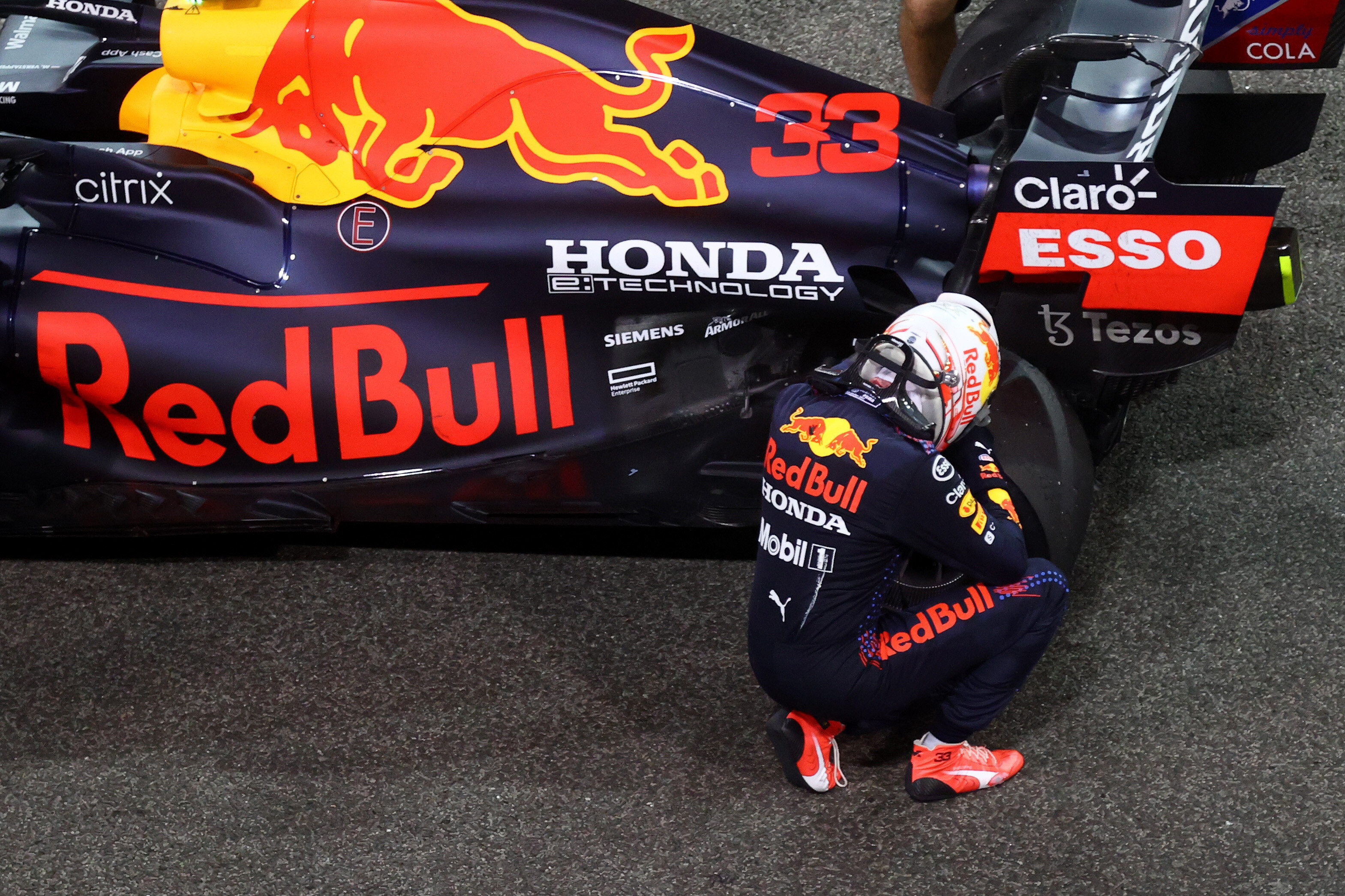
The "couldn’t care less" persona is not armour Max Verstappen chose to put on. It is the shape he was pressed into. That it happens to be exactly the shape required to dominate the most demanding sport on the planet is either a great coincidence or a great tragedy. More likely, it is simply what it is: the unintended psychological portrait of a father who never finished first, determined that his son would.
There is a moment — repeated endlessly in highlight reels, press conference clips, and fan forums — that captures Max Verstappen better than any race win ever has. A reporter asks something pointed. A penalty has just been handed down, a rival has lodged a complaint, a pundit has called his driving dirty. And Max just shrugs. Not the performative shrug of someone suppressing a reaction. The real thing. The shrug of a man who genuinely could not locate the nerve the question was meant to hit. It is disarming in a sport built almost entirely on ego and sensitivity to outside opinion. It is also, if you know where Max Verstappen comes from, the most predictable thing in the world. The "couldn’t care less" persona that defines his public presence — the flat affect after victories, the indifference to media criticism, the radio outbursts followed by immediate emotional reset, the press conference one-liners delivered with the warmth of a tax return — is not a brand strategy. It is not media training gone brilliantly right. It is the psychological output of a childhood that, by most conventional metrics, was all kinds of wrong.
The blueprint
Jos Verstappen competed in 107 Formula One Grands Prix. He won zero of them. Two podiums, no pole positions, seventeen career points — the resume of a journeyman who arrived at Benetton alongside Michael Schumacher in 1994 and spent the next nine years watching the sport's elite do what he could not. This matters because when a parent redirects their own arrested ambition toward a child, psychology has a name for it: what researchers describe as narcissistic enmeshment — a dynamic in which the child's achievements become the primary source of the parent's self-worth. Jos never articulated it that way. But the structure of Max's childhood reflects it with uncomfortable clarity. His personal life added further turbulence. Jos and Sophie Kumpen, Max's mother — herself a decorated kart racer who had beaten the likes of Jenson Button and Giancarlo Fisichella — married in 1996 and divorced in 2008, when Max was ten. The split was not quiet. That year Jos appeared in court on charges including threatening messages and alleged assault against Sophie. He was found guilty only of the texts, not of physical violence. But for a child already being shaped by the expectations of a father who treated motorsport as a vocation rather than childhood, this was the domestic backdrop. Instability at home, iron expectations on track.
No childhood included
Max has said, with characteristic flatness, that he "really had to give it all while other kids were playing" — and that sometimes he would have liked to play football on Saturdays. That line is almost throwaway when he says it. Which is itself revealing. He is not lamenting it. He is reporting it the way you might report a flight delay. Something that happened. Something that did not reconfigure his sense of what childhood should be, because it was all the childhood he had. The practical reality was relentless. Training in the rain near Lake Garda with fingers too cold to feel. Seventeen-hour van journeys across Europe for karting championships. Time in workshops testing carburettors and exhausts that most teenagers couldn't name. Jos kept him on track even when Max was physically miserable, on the logic that experiencing the worst conditions was preparation, not punishment. Psychologically, what this produces is what developmental researchers call desensitisation through repeated exposure: when distress is frequent enough, the nervous system recalibrates its baseline. What registers as extreme for someone else begins to register as normal. Not because the child becomes stronger, but because the threshold for what counts as a threat quietly shifts upward.
The Incident
The story that became shorthand for Jos's parenting style unfolded in 2012 at the CIK-FIA KZ2 Karting World Championship in Sarno, Italy. Max, fourteen years old, started from pole position. On the second lap, attempting to retake the lead, he made contact with the car ahead and spun out. Jos was furious. He refused to speak to Max on the journey home. Max tried repeatedly to open a dialogue — to explain, to debrief, to process what had happened. Jos shut it down each time. Eventually, at a petrol station somewhere in southern Italy, he told Max to get out of the van. And drove away. Max was picked up by his mother, who had been following behind. Jos has since insisted he never intended to truly abandon his son. But Max has never disputed the core of it: his father, enraged by a racing mistake, rejected him physically and then imposed a week of complete silence as punishment. This pattern — emotional withdrawal in response to failure — is one of the more consequential parenting behaviours in the clinical literature. It maps onto what researchers call conditional regard: the implicit message that love and connection are available contingent on performance, and withdrawn when performance falls short. Children raised under conditional regard tend to develop avoidant coping strategies — learning that expressing emotion does not produce safety, learning to emotionally self-contain. They often appear remarkably composed under pressure. And they often are. The composure is real. So is its cost.
What Jos built, intentionally and otherwise
Jos has never shown much remorse for any of this. "I was hard on him, that was also my plan," he said in the 2023 Viaplay documentary Anatomy of a Champion. "A lot of people have no idea what you have to do to arrive at the top of a sport." Max has largely corroborated this — he has said the harshness prepared him for F1 in ways nothing else could. Helmut Marko reportedly observed that at fifteen, Max gave the impression of a man a decade older. This is often cited as evidence the approach worked. It did work. But what Marko was observing was not simply maturity. It was compression. A child who learns early that his emotional responses are irrelevant to the continuation of experience develops the ability to appear regulated not because he is at ease, but because he has internalised that visible distress changes nothing. That is not emotional health. It is, however, extraordinarily useful on a race track.
The F1 persona
Three things define Verstappen's public personality in F1, and all three trace back to Jos's methods. The first is his indifference to outside opinion. In 2017, asked about sustained criticism of his aggressive driving, a nineteen-year-old Max said: "The biggest critic I have in my life is my dad, so everything else is just a breeze; it doesn't really matter to me." It is one of the most psychologically honest things he has ever said publicly. When the most terrifying critic you have known is your own father, and you have survived that for your entire conscious life, there is genuinely nothing a journalist or pundit can say that reaches the same register. The second is his zero-hesitation driving. Verstappen commits to moves at over 300 kilometres per hour that other drivers file away as theoretical. This is not recklessness — he is statistically among the most precise drivers in the sport's modern era. It is the kinetic expression of a psychological system that was never allowed to develop the habit of second-guessing. When hesitation and doubt were trained out of you before you were old enough to vote, the body just acts. The third is what happens after he wins. After ten consecutive victories in 2023 — the greatest streak of sustained dominance in modern F1 history — Verstappen did not look transcendently happy. He looked satisfied the way a professional looks satisfied when a job is completed well. When achievement is never met with warmth, only with expectation of the next performance, joy does not become the default response to success. Winning, for Max, is the baseline. Everything else is falling short.
The cost of the blueprint
Four world championships. Seventy-one race wins. A consensus, among peers and historians alike, that he is among the greatest drivers in the sport's history. By Jos's own metrics — the only metrics he ever seemed to apply — the plan worked completely. But gratitude and psychological cost can occupy the same space. The boy who was left at a petrol station at fourteen, who learned that love was available conditional on lap times, who discovered before he could legally drive on a public road that the safest response to failure was silence — that boy became the man who shrugs when the world expects him to flinch. The "couldn’t care less" persona is not armour Max Verstappen chose to put on. It is the shape he was pressed into. That it happens to be exactly the shape required to dominate the most demanding sport on the planet is either a great coincidence or a great tragedy. More likely, it is simply what it is: the unintended psychological portrait of a father who never finished first, determined that his son would.