News
The 50/50 split is dead – F1 finally admits it
By Kavi Khandelwal
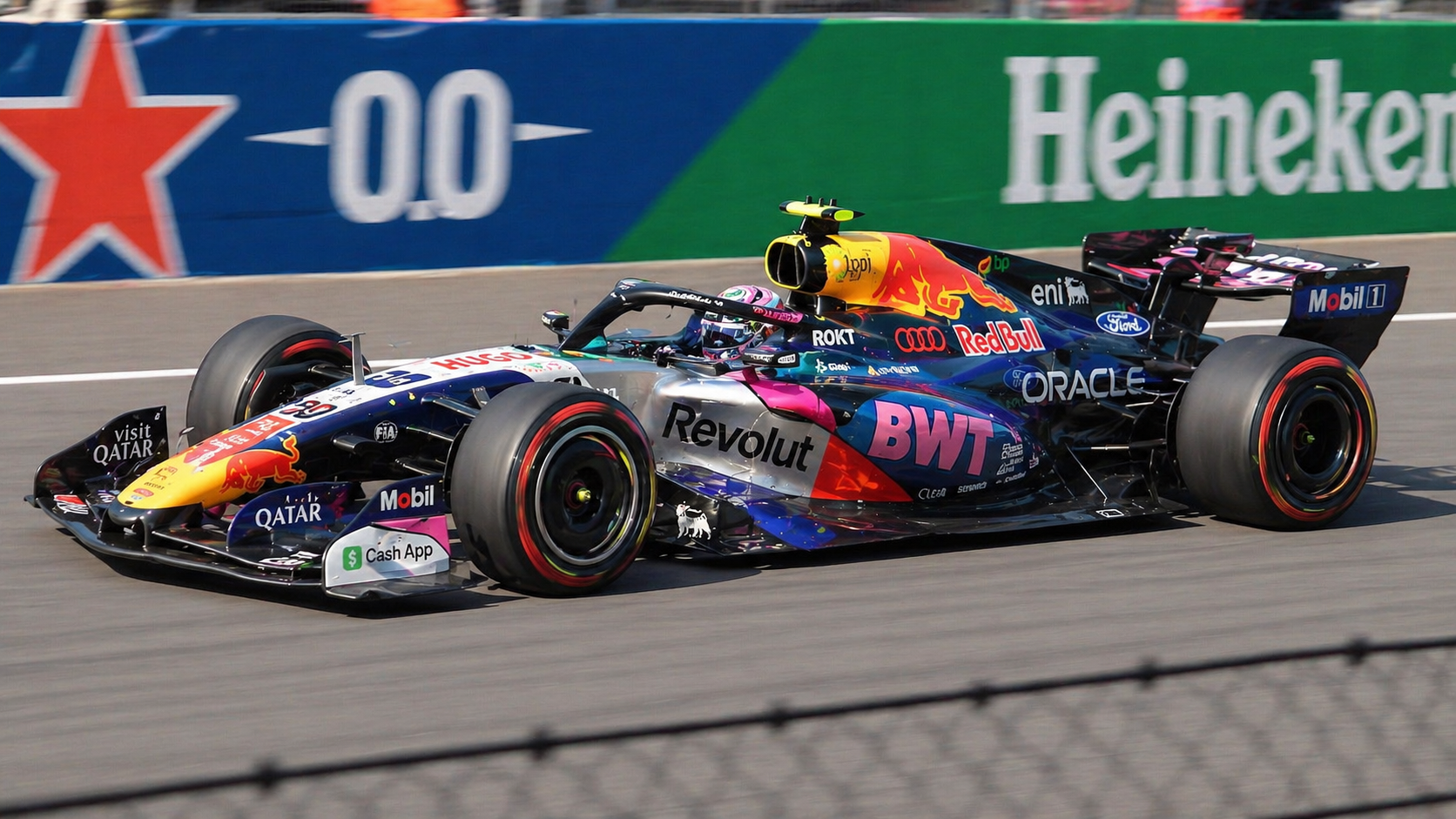
The sport has agreed in principle to overhaul the 2026 power unit rules for 2027, shifting the balance back toward the combustion engine. Here's what it means — and why it matters.
It has been a season of compromises. Drivers tiptoeing around invisible energy walls. Teams managing deployment like a household budget in the final week of the month. The 2026 power unit regulations were supposed to be Formula 1's great leap forward — a marriage of electrification and raw combustion power, split evenly down the middle. In practice, the 50/50 split has left drivers energy-starved, circuits feeling neutered, and paddock voices growing louder by the race. Now, F1 is listening. Following an online meeting on Friday involving teams, power unit manufacturers, F1, and the FIA, the championship has agreed in principle to fast-track hardware changes for 2027. The headline shift: moving away from the notional 50/50 power balance between the internal combustion engine (ICE) and the electrical elements, and towards something closer to a 60/40 split in favour of the ICE.
https://youtube.com/shorts/A7QJWTSeJOA?feature=share
What's actually changing?
In technical terms, the plan is to increase ICE output by 50kW through a fuel-flow increase, while pulling back the electrical element from 350kW to 300kW. The net result should be a power unit that leans harder on the combustion side — freeing drivers to push more consistently and reducing the moments where a depleted battery forces them to lift, coast, or manage. The FIA confirmed that "further detailed discussion in technical groups comprising teams and power unit manufacturers" is required before the final package is signed off, so the specifics remain in flux. From here, the proposals move through formal governance — the F1 Commission, the Power Unit Advisory Committee, and ultimately the FIA's World Motor Sport Council. It won't be quick. But the direction is set.
Why it matters
The 50/50 split was always ambitious — a philosophical statement as much as an engineering one, tying F1's identity to road-relevant electrification. The problem is that road relevance and flat-out racing don't always want the same things. This season, the consequences of that tension have been visible. The lack of battery power has introduced what the sport itself describes as "unintended consequences and complications" — cars that feel unintuitive to drive, and races where the spectacle is blunted by energy management rather than elevated by it. A 60/40 shift won't flip a switch and fix everything overnight. There's meaningful work required: power units will need to be made more robust, and chassis will require fuel tank modifications to accommodate the new demands. These are not trivial changes to push through in a single development cycle, which is exactly why the meeting's outcome matters — consensus was reached to act now rather than defer to 2028. Given how the 2026 season has unfolded, that urgency feels earned.
The short-term picture
The Friday meeting also reviewed the modifications introduced at Miami, which adjusted harvesting and deployment levels. The FIA signalled those tweaks are still being evaluated, and further adjustments at future events remain on the table — including improved start-safety revisions and wet weather measures. Visual-signalling improvements are being specifically assessed ahead of the Canadian Grand Prix. It's a reminder that the 2026 ruleset is still very much a work in progress. The framework exists; it's the fine-tuning — and now, the more significant recalibration — that is defining this season as much as anything happening on track. For F1, this is an admission that the balance wasn't right. More importantly, it's a decision to do something about it.